
Before You Punish the Behavior, Ask What Your Dog Actually KnowsDog

Impulse Control Training - Eight Fundamental Skills
When a dog barks, lunges, jumps, grabs something inappropriate, ignores a recall or becomes so overexcited that nothing seems to get through, most people focus on stopping the behavior. But before correcting the dog, there is a more important question to ask: does your dog actually know what you want them to do instead?
At BNADOG, the fundamental skills of sit, down, stay, come, heel, up, off and free are not simply commands. They create a working language between you and your dog. They give the dog practiced behaviors that can replace instinctive responses and, over time, help develop impulse control and self regulation.
Dogs come with behavior already built in.
They bark.
They chase.
They dig.
They grab things.
They use their mouths.
They move toward things that interest them.
They become excited by movement, smells, people, dogs, wildlife and anything else that captures their attention. None of this is particularly surprising when we remember that we are living with an animal whose natural behavior was not designed around our household rules.
The problem begins when we expect a dog to somehow know:
that jumping on a guest is wrong,
grabbing something from the floor is inappropriate,
pulling toward another dog is unacceptable
or running through an open door is dangerous
without having spent enough time teaching the behaviors we actually want.
THIS IS WHERE OUR FUNDAMENTALS BEGIN.
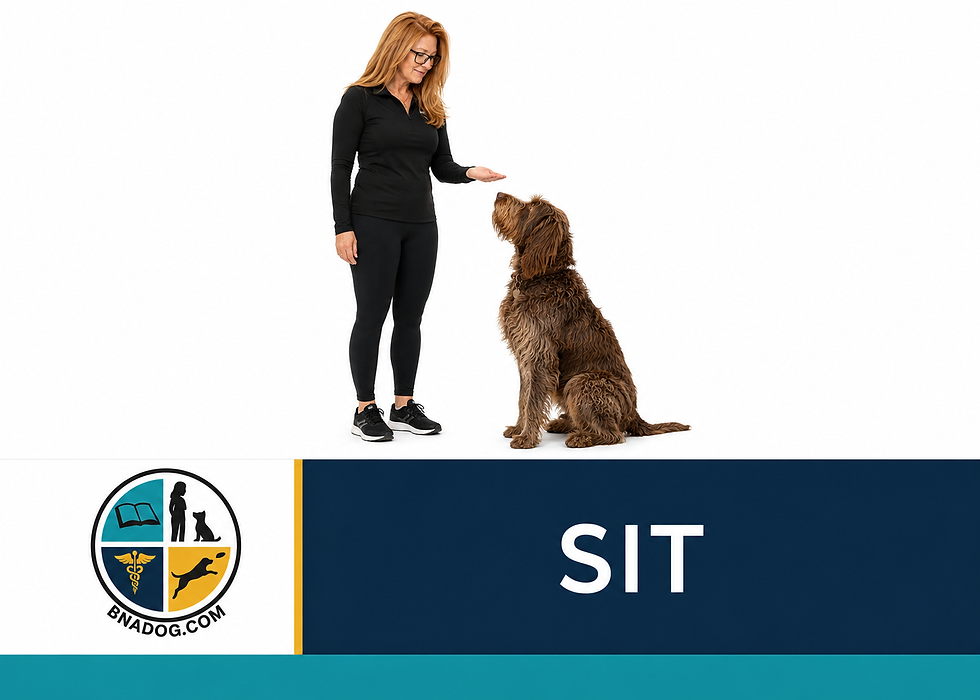
Sit is often dismissed as the easiest thing a dog learns, but its real value is in teaching a pause. When a dog learns to stop forward movement, settle its body and wait for information, we begin interrupting the automatic sequence of seeing something, moving toward it and acting. That makes sit useful for greetings, doorways, vehicle exits, food, visitors and any number of situations where the dog's first instinct is to move.

Down adds another layer because it requires the dog to settle more of the body. It becomes useful when a dog needs to remain in one location, reduce unnecessary movement and learn that being still is also a behavior. For dogs that pace, follow every movement in the house or constantly insert themselves into activity, down can become part of learning how to exist around stimulation without participating in all of it.
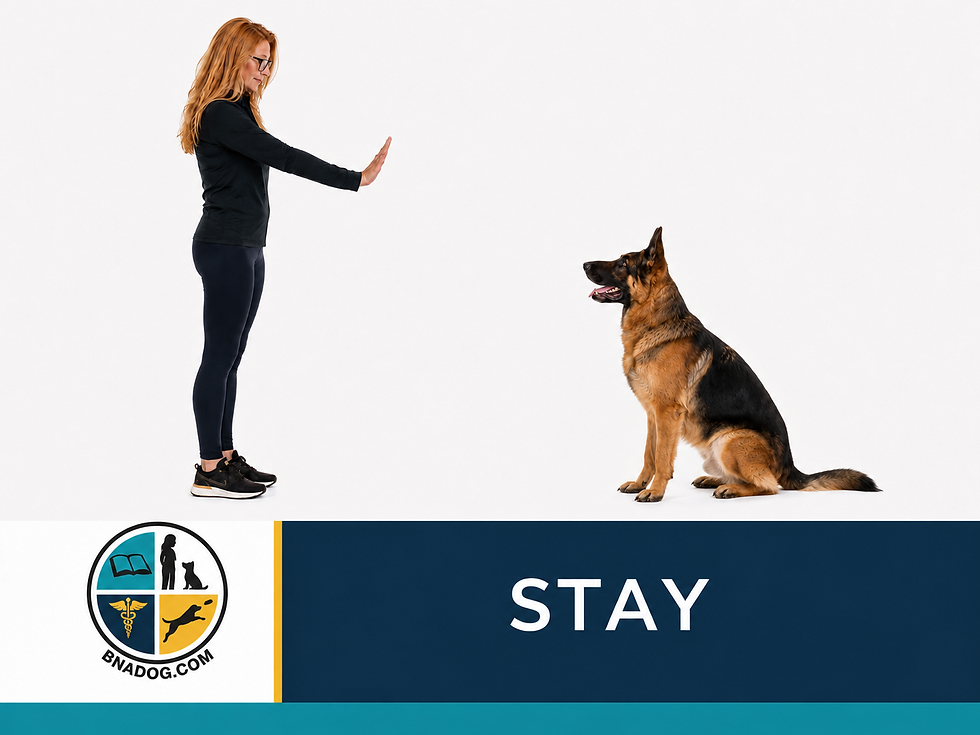
Stay teaches something slightly different. It asks the dog to notice what is happening and remain where it is. That matters because so much unwanted behavior starts with the belief that seeing something means acting on it. A door opens, another dog appears, food comes out, a person walks into the house, and the dog immediately moves. Stay begins teaching that movement can be delayed.

Come is the skill that allows us to interrupt fixation and bring the dog back into relationship with the handler. A good recall is not simply about the dog running toward you. It requires the dog to disengage from whatever has its attention. That may be another dog, a smell, wildlife, digging, a toy or something found on the ground. This is one of the reasons recall has to be built gradually. Coming from across the kitchen and coming away from a deer are not remotely the same exercise.

Heel gives the dog a defined place to move beside the handler and is one of the most practical skills for dogs that become overexcited in motion. When the environment becomes stimulating, the dog needs more than a correction for pulling. It needs a practiced movement pattern that tells the body where to be and gives the dog a job to perform. Heel can be used when passing other dogs, navigating busy areas, entering buildings or simply restoring connection during a walk.
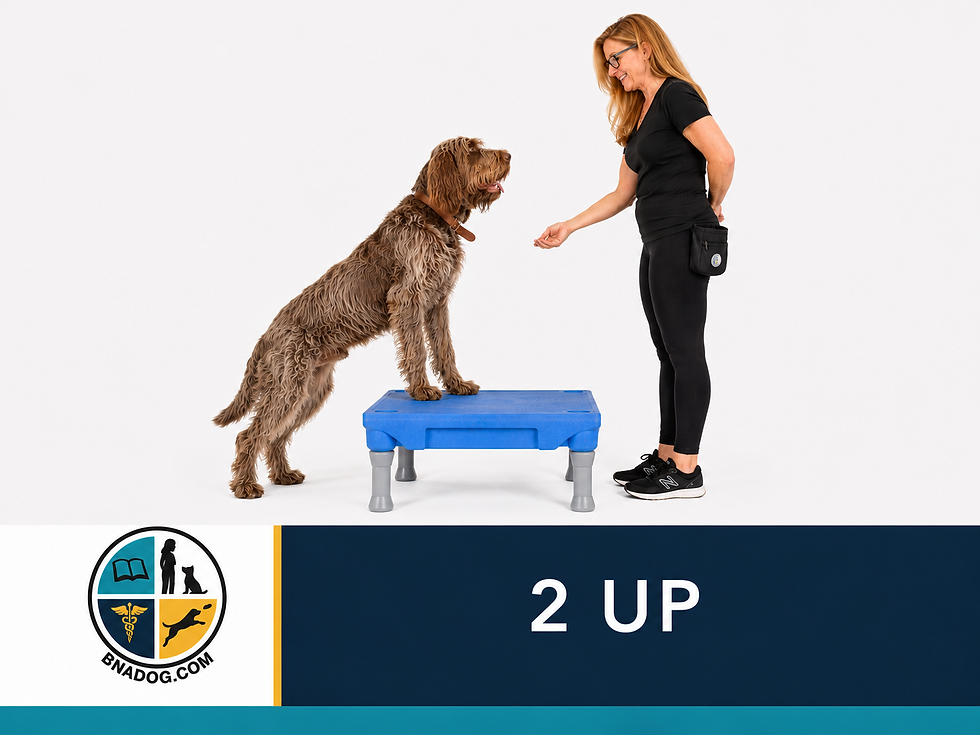
Up (or pedestal) teaches the dog to move intentionally onto a platform, step, pedestal or other defined surface. It may seem like a small skill, but it builds body awareness, confidence and purposeful movement. It is especially useful for dogs that become scattered in stimulating environments because instead of wandering and reacting to everything around them, they can be directed toward a specific physical task.

Off is another cue that is often used without being properly taught. People say off when the dog jumps on a person, climbs on furniture, puts paws on a counter or gets into something inappropriate, but unless the dog understands the cue, repeating it louder does very little. Off should mean disengage, remove yourself and create space.
Then there is free, which may be one of the most important and least consistently taught cues. If we ask a dog to sit, stay, heel, remain on a platform or wait at a doorway, the dog also needs to know when the behavior is finished. Free creates that release. Without a release cue, dogs are often left guessing when they are allowed to move again, which creates inconsistency in everything else we are trying to teach.
None of these skills matter very much if we only practice them in ideal conditions.
A dog can know sit perfectly in the kitchen and still be unable to sit when another dog walks past. A dog can come immediately from ten feet away in the house and completely ignore the same cue outside. A dog can heel beautifully in the driveway and lose the behavior entirely in a crowded parking lot. That does not necessarily mean the dog is refusing. It may mean the dog has not generalized the skill to that level of distraction. This is also why training under threshold is so important.
If the dog is barking, lunging, frantic, frightened, highly frustrated or so overexcited that it cannot process information, that is not an ideal learning state. At that point the dog may be responding almost entirely to the environment. Expecting thoughtful behavior while the nervous system is already overwhelmed is unrealistic.
Training under threshold means finding the level where the dog can still notice what is happening and remain available to learn. The dog can respond to familiar cues, take reinforcement, recover after stimulation and make a different choice. That is where useful learning takes place.
Over time, the goal is that these trained behaviors begin to support something larger than cue compliance. They begin supporting self regulation. At first, the human creates the structure. Sit here. Wait there. Come back. Walk beside me. Stay until released. Eventually, with enough repetition, the dog begins to pause before acting. It sees a person and does not immediately jump. It notices another dog and checks back with the handler. A door opens and the dog waits. Something falls on the floor and the dog hesitates before grabbing it. That pause is important because it is the space where another behavioral choice becomes possible.
The goal is not to spend the dog's entire life saying no. The goal is to teach enough appropriate behavior that the dog has something else available when instinct, excitement, frustration or curiosity shows up. Before you punish a behavior, ask yourself whether the dog actually knows what you want instead and whether the dog has learned that skill well enough to perform it in the situation you are asking for it. That question usually tells us far more than whether the dog is being good or bad.
A Different Way to Look at Training
At Before N After Dog Training, training is not about creating a dog that simply performs on command. It is about building communication, impulse control, environmental awareness and the ability to regulate behavior in real life. If your dog seems to know what to do at home but falls apart around visitors, dogs, wildlife, movement or excitement, the issue may not be that your dog needs more correction. The dog may need stronger foundational skills, better generalization and training at a level where learning is still possible. Before N After Dog Training provides individualized, behavior focused training designed around the dog in front of you and the environment in which you actually live. To learn more about consultations, private training and upcoming BNADOG programs, visit BNADOG.com or contact info@bnadog.com.
Comments